
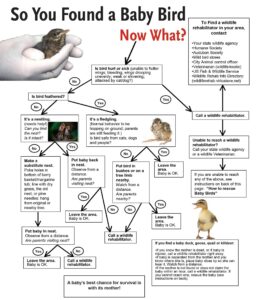
 Finding a fledgling bird can be a common occurrence, especially during the spring and summer months when many birds are breeding and raising their young. Fledglings are young birds that have just left the nest and are learning to fly and forage for food. If you come across a fledgling bird, here are some steps to follow:
- Observe from a distance: Before taking any action, watch the fledgling from a distance for a little while. Sometimes, fledglings might appear to be alone, but their parents are nearby, keeping an eye on them and providing food and protection.
- Determine if the bird is truly in need of assistance: If the bird appears healthy, fully feathered, and is hopping or fluttering around, it’s likely a normal fledgling. In this case, it’s best to leave it alone and let the parents continue to care for it.
- Keep pets and children away: Ensure that any pets or children are kept at a safe distance to avoid stressing the fledgling or causing harm.
- If the bird is in immediate danger: If the fledgling is in a dangerous location (e.g., a busy road), gently and carefully move it to a safer spot nearby. You can use a towel or cloth to pick it up to minimise stress on the bird.
- Do not handle the bird excessively: Handling the bird too much can cause stress and increase the risk of injury. Avoid touching the bird unless absolutely necessary.
- Monitor from a distance: After moving the fledgling to a safer location, continue to watch from a distance to see if the parents return. They may continue to care for it even if it has been briefly handled.
- Contact a local vet or Wildlife Victora: If the fledgling appears injured, weak, or has been abandoned by its parents for an extended period (several hours), it’s best to contact a Wildlife Victoria or your local vet clinic. They can assess the situation and provide appropriate care if needed.
- Do not attempt to raise the bird yourself: It’s generally not advisable to attempt to raise a wild bird on your own. Wild birds have specific dietary and care requirements that are best handled by experts in wildlife rehabilitation.
Remember that it’s illegal in many places to keep wild birds as pets without the necessary permits, and it’s important to prioritise their well-being and natural behaviours. Always consult with professionals when dealing with wildlife to ensure the best outcome for the animal.