Pet advice
Dental care at home
Good dental care at home can prevent painful dental disease. Here is how to keep your pet’s teeth and gums healthy.


Pet advice
Good dental care at home can prevent painful dental disease. Here is how to keep your pet’s teeth and gums healthy.
Dental disease and tartar accumulation are very common in cats and dogs. Without appropriate dental care, plaque and tartar can contribute to gum infections, gingivitis and more serious disease affecting the teeth, gums and supporting bone.
The good news is that regular dental care at home can help maintain your pet’s oral health and reduce the build-up of plaque and tartar.
At Narre Warren Vet, we recommend making dental care part of your pet’s regular routine.
Plaque is a soft, grey film that forms on the teeth and can be removed relatively easily.
When plaque is allowed to accumulate, it can calcify and become tartar. Tartar is hard and firmly attached to the teeth. Once significant visible tartar has developed, it usually requires a professional dental procedure under general anaesthesia to remove it.
Dental disease can range from simple gum inflammation and gingivitis through to more advanced disease involving tooth, gum and bone loss.
The best approach is prevention and early intervention.
This depends on the level of disease that your pet has. We recommend booking in a health check to review your pet’s dental health if you have any concerns. Dental home care is only effective as a preventative measure. If they have developed visible tartar on the teeth, it will only progress and worsen over time.
There are four important components of dental home care:
These products can be useful additions to your pet’s dental-care routine, but additives are not a replacement for brushing or chewing.
Daily brushing is the most effective way of fighting dental plaque and tartar.
It is best to introduce tooth brushing when your pet is young, so they have time to become accustomed to the routine. However, pets of any age can be gradually introduced to brushing.
Never use human toothpaste.
When using toothpaste, squeeze it between the hairs of the toothbrush. This can help prevent your pet from simply licking the toothpaste off.
Don’t expect to brush your pet’s entire mouth on the first attempt.
Start by brushing just a few teeth. The molars at the side of the mouth can be an easy place to begin. Gradually add more teeth each time until you are able to clean the whole mouth.
Brush the cheek side of the teeth only, rather than attempting to brush the tongue side.
And don’t forget the reward! Finish each session with plenty of pats, a walk or your pet’s favourite toy.
Ideally, brush your pet’s teeth every day.
If daily brushing isn’t possible, aim for a minimum of three times per week. Brushing less frequently may allow plaque to accumulate faster than it can be removed. However, any brushing is better than nothing.
Cats can be particularly good at hiding signs of dental pain, which makes regular dental checks and appropriate home care important.
For cats, we recommend considering a combination of:
Dental diets are balanced diets specifically designed to help clean the teeth through chewing.
Examples include:
Greenies for cats are dental care treats available in a range of flavours.
Some cats develop a chronic dental condition called Feline Odontoclastic Resorption (FOR).
With FOR, structures of the tooth, including the crown and roots, effectively dissolve. These lesions can be extremely painful.
One of the challenges is that many cats do not show obvious signs until the pain has become severe.
Importantly, FOR develops regardless of dental hygiene. Good home dental care does not prevent this condition.
Dental X-rays are required to detect FOR lesions.
The majority of lesions begin below the gum line, meaning they may not be visible when simply looking inside your cat’s mouth.
Possible visible changes include:
A dental procedure is required to treat FOR lesions, usually involving removal of the affected tooth, before dental hygiene measures are introduced. Brushing or hard chews can be painful when an FOR lesion is present.
Dogs can benefit greatly from a consistent dental-care routine at home.
Alongside regular brushing, dental diets, and appropriate dental chews can help maintain dental hygiene.
Dental diets are balanced diets designed to help clean the teeth as your dog chews the kibble.
Examples include:
Every dog responds differently to dental chews, so you may need to trial assorted products to find an option that works well for your dog.
The shape, size and texture of a chew are important. Rotating different dental products can encourage your dog to chew in different ways and engage more of their teeth.
Examples of dental chews included in our dental-care handout are:
As a general guideline, aim for around 20 minutes of chewing time per week.
For example, if a chew lasts approximately five minutes, your dog will need four chews per week to reach 20 minutes.
We do not recommend feeding bones or antlers to dogs.
Although some dogs may tolerate these products without an obvious problem, they are a common cause of:
There are safer ways to incorporate chewing into your dog’s dental-care routine.
Some oral washes, gels and other additives can help reduce plaque and tartar formation, clean the mouth and freshen your pet’s breath.
Many pets accept these products readily.
However, it is important to remember that oral additives do not replace brushing or chewing. Think of them as an additional part of your pet’s dental-care routine rather than the sole method of maintaining oral health.
For cats and dogs, you can consider PlaqueOff powder or Prozym water addition.
We recommend checking products against the Veterinary Oral Health Council (VOHC), an independent organisation that evaluates oral-health products and maintains lists of products it has determined to be effective.
Not every pet will tolerate tooth brushing.
If your pet becomes aggressive or you feel threatened by their behaviour while attempting to brush their teeth, do not persist.
Brushing is considered the gold standard for dental hygiene management, but it isn’t always an option for every pet.
There are other ways to support your pet’s dental health, and our veterinary team can help you determine an appropriate dental-care routine.
If you notice tartar, red or inflamed gums, changes to your pet’s teeth, bad breath, difficulty chewing or signs of oral discomfort, we recommend having your pet’s mouth assessed by a veterinarian.
Remember that cats in particular can hide significant dental pain, and some dental conditions cannot be identified simply by looking at the teeth.
Regular veterinary dental examinations can help identify problems early.
Good dental health starts with regular care.
Brushing your pet’s teeth regularly, choosing appropriate dental products and having their mouth checked by your veterinary team can all play an important role in maintaining their oral health.
If you’re unsure which dental-care products or routine are right for your cat or dog, speak with the team at The Narre Warren Vet.
Knowledge library
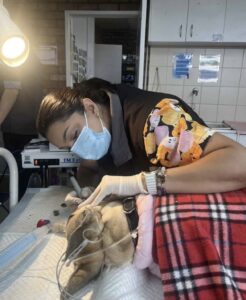
A lot of pet owners picture a “dental” as a quick teeth clean. In reality, it’s a full [...]

Helping your pet reach their ideal weight isn’t just about feeding less — it’s about feeding smarter. This [...]

Just like humans, pets can struggle with weight gain — and even a small amount of excess weight [...]
Book online in a few clicks or call our friendly team. We look forward to meeting you and your pet.